
Alepeo Magazine
Olive oil + laurel berry oil
The two defining poles of traditional Aleppo soap.
Months to maturity
Not an afterthought, but a genuine quality attribute.
Face, Hair, Body
Precisely there, the interesting everyday questions arise.
Explain Aleppo soap
Measured information on raw materials, maturation and application of Aleppo soap.
Editorial still
Soap, stone and laurel in calm light.
Fewer ingredients, more context
Many people are not looking for miracle skincare, but for a soap with a transparent formulation and traceable origin. That is precisely where the fascination with Aleppo soap begins.
Does it work on the face, in the shower, or in the hair?
The most important questions are seldom about brands, but about everyday use: How effectively does it clean? Does it leave the skin feeling tight? How does it feel on sensitive skin?
Why maturity and earned recognition are more than buzzwords
There is a real difference between fresh kettle-made soap and well-matured Aleppo soap. Those who understand this buy and use it more consciously.
Featured Story
What 'original Aleppo' really means: provenance markers to verify when buying
“Original Aleppo” sounds unequivocal — but it seldom is. Which provenance markers are genuinely reliable, how to verify INCI, manufacturer declarations and the formulation, and why “more laurel” isn’t automatically better.
Read this articleAlepeo aims to classify, not to sell.
Therefore, this is not about product promises, but about manufacturing, formulation, application and actual differences in use.
Advancing natural routines
When topics meaningfully complement each other, Alepeo occasionally refers to Alepeo.fr, without structuring its content around that site.
View Alepeo.fr
The questions that really matter
Don't collect myths; make Aleppo soap understandable.
People searching for Aleppo soap are usually not looking for superlatives, but for honest answers about skin, usage, origin and ingredients.
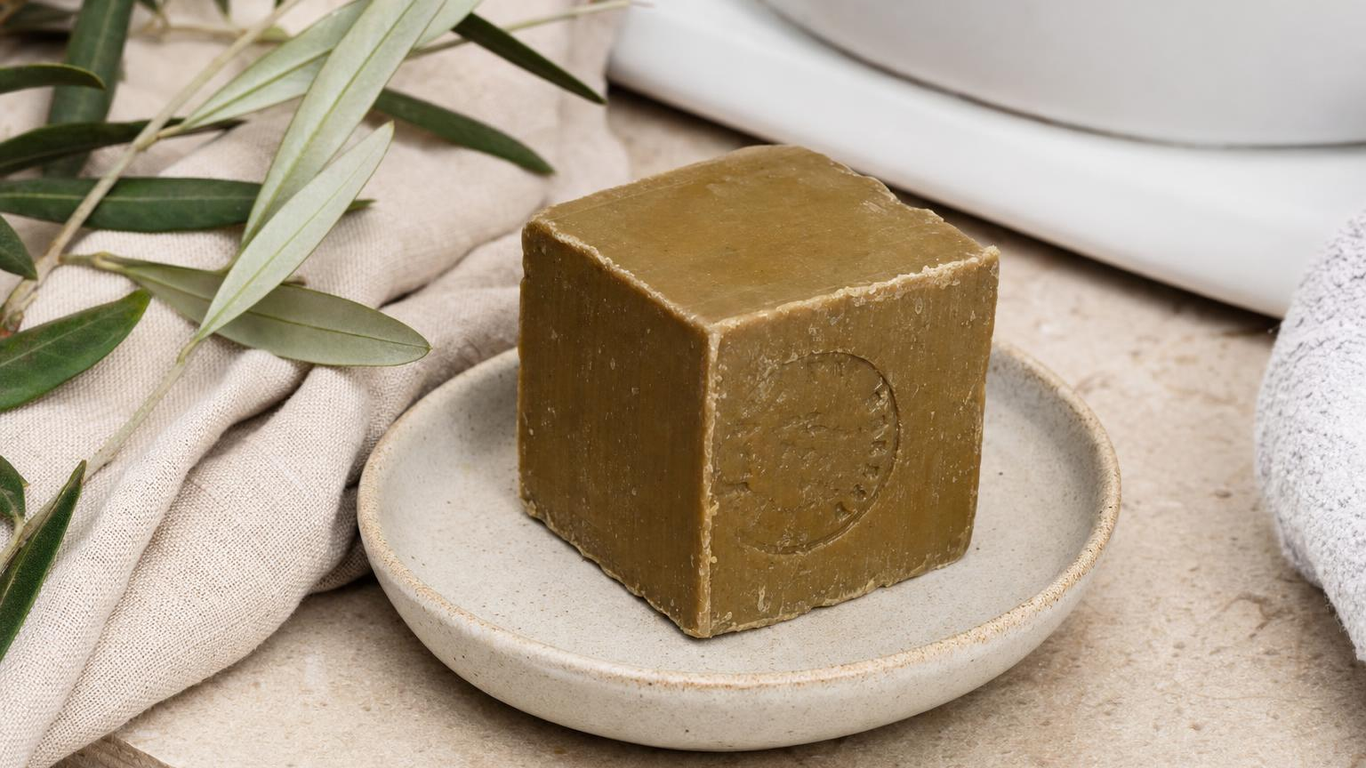
How can I recognize a good Aleppo soap?
Not by loud packaging, but by transparency: origin, formulation, laurel content, maturation time and a credible overall character are the meaningful markers.
Why does Aleppo soap feel different from shower gel?
Because it does not follow the same product logic. Aleppo soap is more pared-down, more direct and often feels more honest on the skin. That can be pleasant, but sometimes requires an adjustment.
What does bay laurel berry oil actually do?
It shapes the scent, character and often the entire experience of the soap. A higher proportion does not automatically mean better, but almost always results in a more distinctive profile.
Is Aleppo soap automatically sustainable?
It aligns well with simplified routines and reduced packaging, but sustainability still depends on raw materials, transport, production methods and everyday use.
In the Magazine
View all posts
Article on use, skin feel, raw materials, and the quiet craftsmanship behind Aleppo soap.
Itchy, stressed skin: What you can stop right away and what really helps
When skin itches and looks stressed, often it’s not more products that help but fewer irritants: lukewarm rather than hot, fragrance-free rather than perfumed, patting rather than rubbing — plus consistent barrier care.
Read postRemoving makeup with Aleppo soap: what works, what doesn't — and how you do it
Many expect Aleppo soap to remove every makeup effortlessly. A reality check shows: with light makeup it often works, while with waterproof and strongly film-forming products you usually need an oil-based step — otherwise you risk friction, residue and a feeling of tightness.
Read postGlycerin in Natural Soap: Why It's Included and What Benefits It Brings
Glycerin in natural soap is usually not an additive but is formed during saponification. What this means for moisture, skin feel and product selection — with a table, a practical check and clear stop points for irritation.
Read postBody care like at the spa: a relaxed at-home ritual with minimal effort
A spa-like feeling at home rarely comes from using more products; it comes from a stable routine. This practical guide shows you a 15-minute ritual, product selection based on how the skin feels, common mistakes, and clear stop points if the skin reacts.
Read postFacial care for the time-pressed: the 3-step routine you can reliably maintain
The misconception: When time is limited, either no skincare is effective or an all‑in‑one product will suffice. This misconception check presents a 3‑step routine that endures: gentle cleansing, straightforward moisturization, and consistent SPF — with dosing, skin‑type selection, and a 7‑day plan.
Read postNatural cosmetics vs. conventional: Compare sustainability fairly — not by gut feeling
Is natural cosmetics truly more sustainable? A fair comparison requires criteria rather than gut feeling: raw materials, packaging system, the use phase, microplastics and unnecessary purchases. With a table and a 10‑minute check to support decisions that work in everyday life.
Read post
Raw Materials in Focus
Aleppo soap does not begin with fragrance, but with olive oil, laurel berry oil and slow maturation.
Anyone seeking to understand Aleppo soap should first examine the raw materials: how much olive oil constitutes the base, how laurel berry oil shapes the soap’s character, and why curing time makes a noticeable difference.
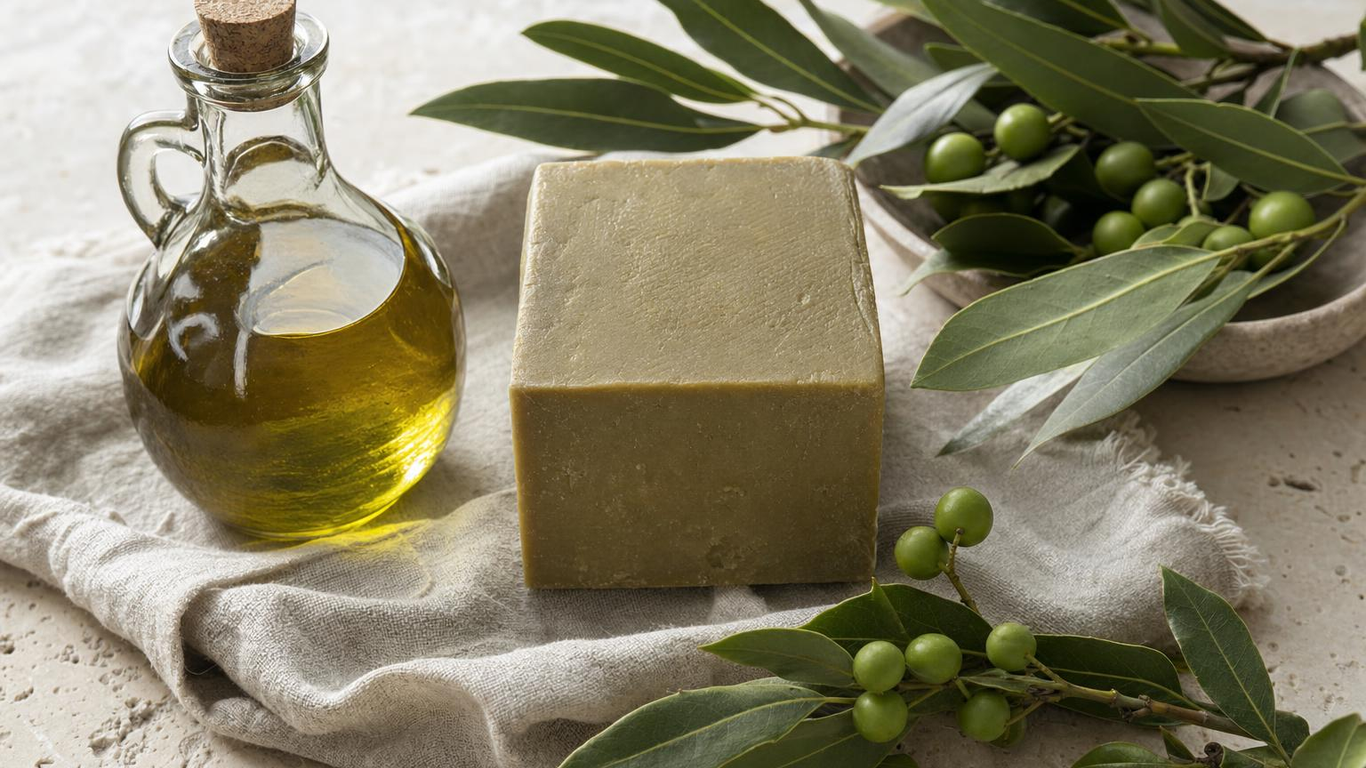
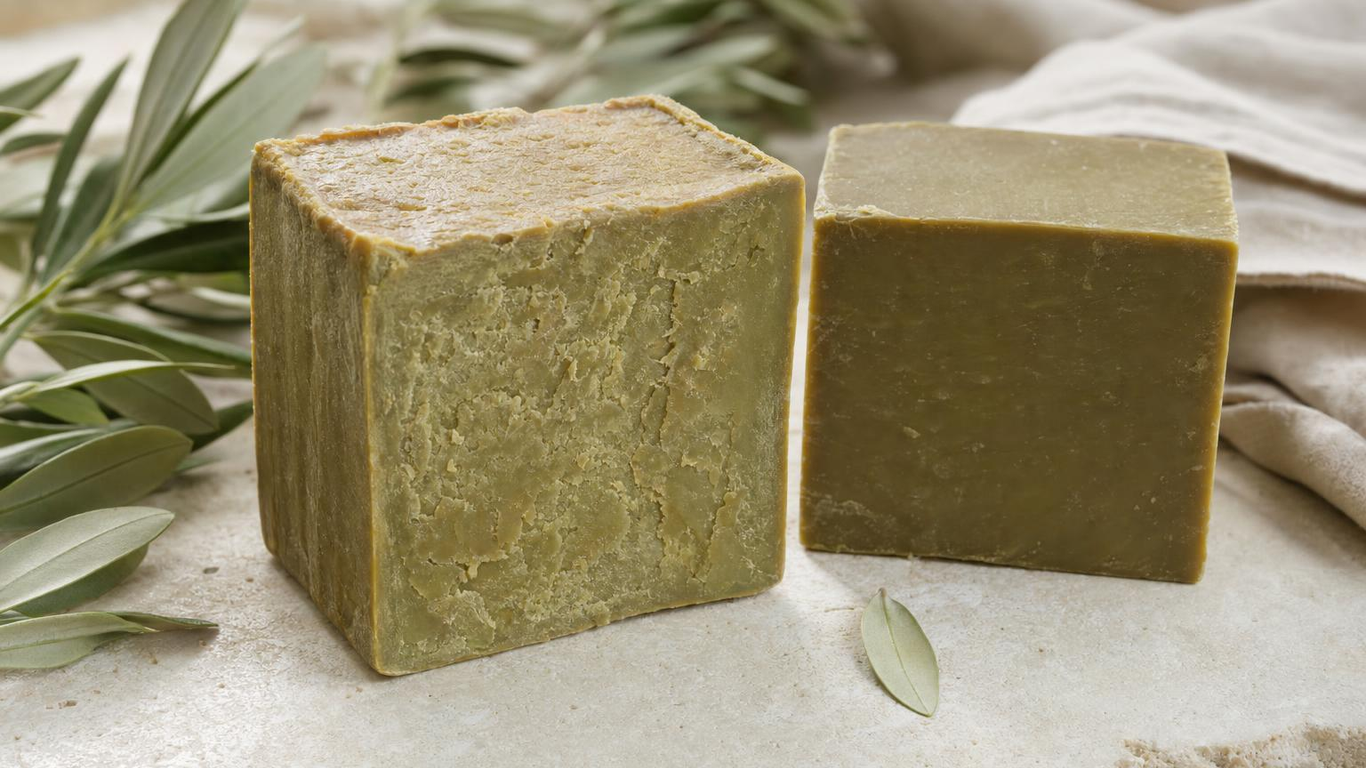
Olive oil
The calm base of the soap
Olive oil gives Aleppo soap its mild, dense base structure. It determines how gentle the soap feels on skin and hands and how creamy the lather is perceived.
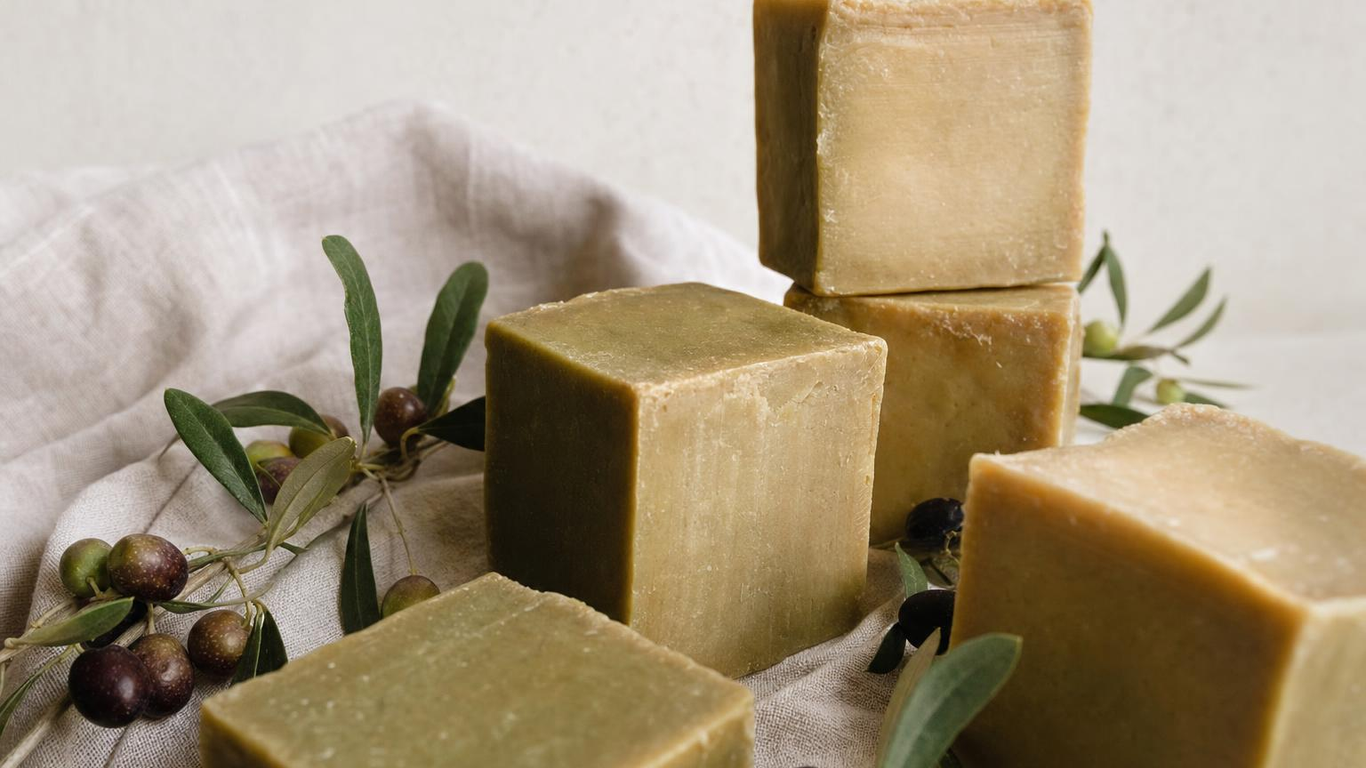
bay laurel berry oil
The distinctive accent
Laurel berry oil adds spice, individuality and a distinctive character. Depending on its concentration, the soap appears fresher, more pronounced, or overall more intense.
Not every difference is immediately visible. Many aspects only become apparent in use: the scent, how the soap feels in the hand, the skin sensation after rinsing, and the way the soap dries and cures.